Wheat Allergy: When Your Body Rebels Against Bread and Pasta.. What's the Story?
Hello there, health heroes! Welcome back to your safe space for a healthier lifestyle. Many of us constantly hear terms like "wheat allergy" or "gluten sensitivity," and you might think it’s just a new diet trend or an exaggeration! But the truth is, Dr. Healthy Side is here today to reassure you and explain that it is a real health condition faced by many people. Raising awareness and understanding it is the very first step toward recovery and comfort for your digestive system.
Let’s understand the story simply, without any complexity, and learn how to live our lives normally without feeling deprived.
The 3 Surprising Types of Wheat Problems (Not all of them are the same!)
To stay organized and structured, we need to know that stomach discomfort caused by bread or pastries isn't just one single type. In fact, World Health Organization studies classify them into 3 main categories:
1. Wheat Allergy
This is a "very fast" defensive reaction from your immune system. The moment you eat something containing wheat, your body treats wheat proteins as an enemy and starts attacking them. Symptoms here can appear almost immediately in the form of skin rashes, difficulty breathing, or sudden digestive issues.
2. Celiac Disease
This is not just a simple allergy; it is a serious autoimmune disorder. When you consume "gluten" (the protein found in wheat), your body mistakenly attacks the lining of the small intestine itself, causing chronic inflammation. Over time, the intestine loses its ability to absorb food properly, leading to vitamin deficiencies and anemia.
3. Non-Celiac Gluten Sensitivity
In this case, when a person eats wheat, their stomach bloats, and they experience gas, diarrhea, or constipation. However, when they run medical tests for Celiac disease or wheat allergy, the results come back negative! This means the body simply cannot tolerate gluten, but without launching an explicit immune attack.
The Most Common Symptoms of Wheat Allergy You Need to Watch Out For
If you always notice these symptoms after eating bread, pasta, or baked goods, global nutrition and health research websites suggest that you pay close attention to your body's warning signals:
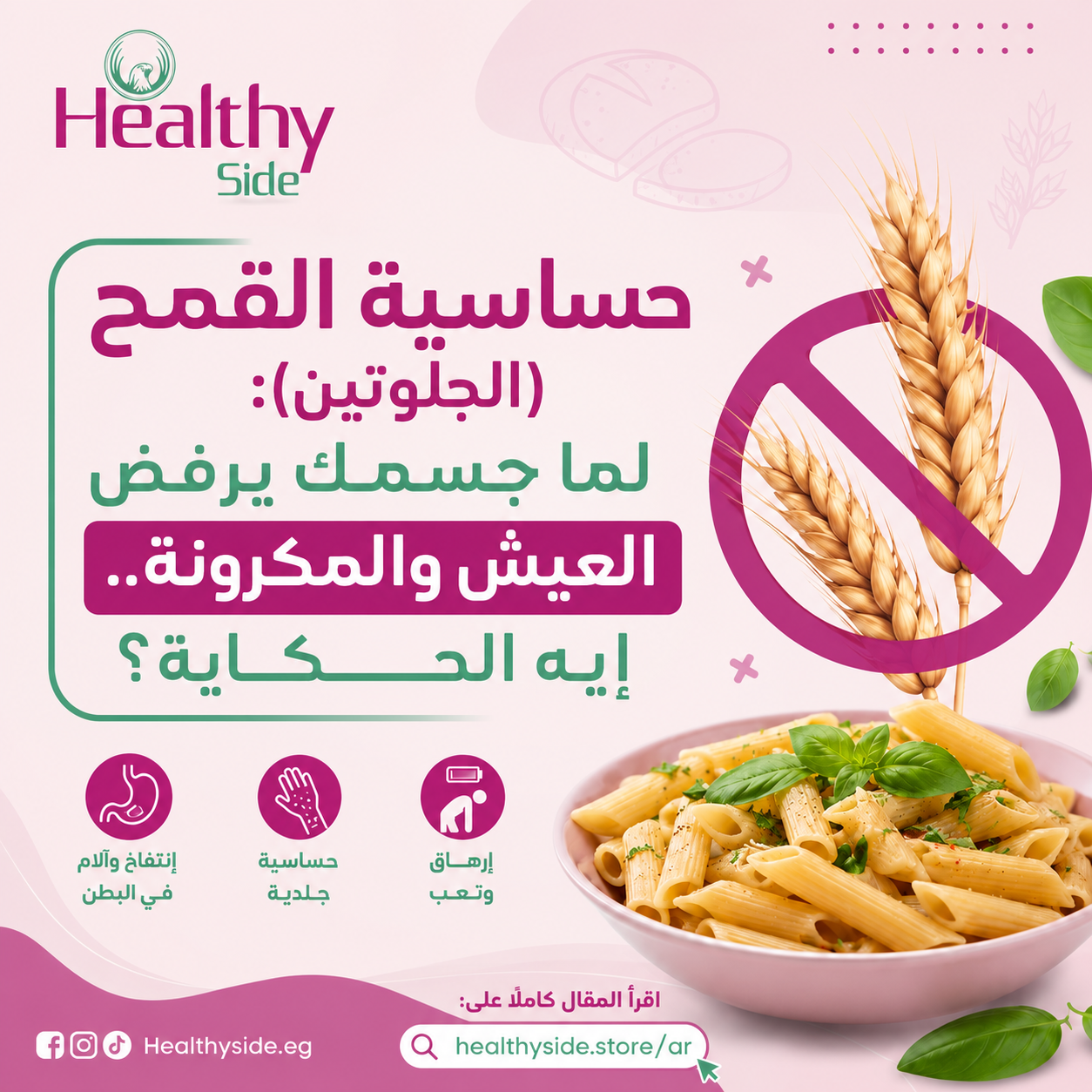
Stomach Troubles: Persistent bloating, gas, and recurring cramps.
Fatigue and Lethargy: Feeling extremely lazy and tired for no apparent reason right after meals.
Skin Issues: Sudden itching, hives, or skin rashes.
Headaches and Brain Fog: Inability to focus or clear your mind after eating pastries.
Magical Alternatives: How to Eat and Enjoy Safely?
Dr. Healthy Side’s motto is always: "A healthy alternative means a happier life!" Cutting out wheat never means deprivation. Nature is full of excellent, completely gluten-free alternatives that you can easily rely on:
Rice and Corn Flour: These are fantastic for baking fresh bread and pastries right at home.
Oat Flour (Certified Gluten-Free): Gives you long-lasting fullness and energy, and it is incredibly gentle on the stomach.
Almond and Coconut Flour: Magical and premium choices for those following a Keto diet and dealing with wheat allergy at the same time.
Your Next Step to a Comfortable Stomach
If you suspect you have a problem with wheat, try cutting it out completely for just two weeks and watch how your body, energy levels, and digestion transform!
To make this journey super easy and provide you with clean, trusted alternatives, you can head over to our [Healthy Store] and explore the special Gluten-Free Products Section that we have carefully selected for you. Also, if you need easy recipes to make using these alternatives, don't miss out on reading our article about refreshing and healthy [Diet Dessert Recipes].
Wishing you a lifetime of health and peace of mind! If you are looking for premium gluten-free products, just visit this link:
https://healthyside.store/ar/products/category/gluten-free
Hello there, health heroes! Welcome back to your safe space for a healthier lifestyle. Many of us constantly hear terms like "wheat allergy" or "gluten sensitivity," and you might think it’s just a new diet trend or an exaggeration! But the truth is, Dr. Healthy Side is here today to reassure you and explain that it is a real health condition faced by many people. Raising awareness and understanding it is the very first step toward recovery and comfort for your digestive system.
Let’s understand the story simply, without any complexity, and learn how to live our lives normally without feeling deprived.
The 3 Surprising Types of Wheat Problems (Not all of them are the same!)
To stay organized and structured, we need to know that stomach discomfort caused by bread or pastries isn't just one single type. In fact, World Health Organization studies classify them into 3 main categories:
1. Wheat Allergy
This is a "very fast" defensive reaction from your immune system. The moment you eat something containing wheat, your body treats wheat proteins as an enemy and starts attacking them. Symptoms here can appear almost immediately in the form of skin rashes, difficulty breathing, or sudden digestive issues.
2. Celiac Disease
This is not just a simple allergy; it is a serious autoimmune disorder. When you consume "gluten" (the protein found in wheat), your body mistakenly attacks the lining of the small intestine itself, causing chronic inflammation. Over time, the intestine loses its ability to absorb food properly, leading to vitamin deficiencies and anemia.
3. Non-Celiac Gluten Sensitivity
In this case, when a person eats wheat, their stomach bloats, and they experience gas, diarrhea, or constipation. However, when they run medical tests for Celiac disease or wheat allergy, the results come back negative! This means the body simply cannot tolerate gluten, but without launching an explicit immune attack.
The Most Common Symptoms of Wheat Allergy You Need to Watch Out For
If you always notice these symptoms after eating bread, pasta, or baked goods, global nutrition and health research websites suggest that you pay close attention to your body's warning signals:
Stomach Troubles: Persistent bloating, gas, and recurring cramps.
Fatigue and Lethargy: Feeling extremely lazy and tired for no apparent reason right after meals.
Skin Issues: Sudden itching, hives, or skin rashes.
Headaches and Brain Fog: Inability to focus or clear your mind after eating pastries.
Magical Alternatives: How to Eat and Enjoy Safely?
Dr. Healthy Side’s motto is always: "A healthy alternative means a happier life!" Cutting out wheat never means deprivation. Nature is full of excellent, completely gluten-free alternatives that you can easily rely on:
Rice and Corn Flour: These are fantastic for baking fresh bread and pastries right at home.
Oat Flour (Certified Gluten-Free): Gives you long-lasting fullness and energy, and it is incredibly gentle on the stomach.
Almond and Coconut Flour: Magical and premium choices for those following a Keto diet and dealing with wheat allergy at the same time.
Your Next Step to a Comfortable Stomach
If you suspect you have a problem with wheat, try cutting it out completely for just two weeks and watch how your body, energy levels, and digestion transform!
To make this journey super easy and provide you with clean, trusted alternatives, you can head over to our [Healthy Store] and explore the special Gluten-Free Products Section that we have carefully selected for you. Also, if you need easy recipes to make using these alternatives, don't miss out on reading our article about refreshing and healthy [Diet Dessert Recipes].
Wishing you a lifetime of health and peace of mind! If you are looking for premium gluten-free products, just visit this link:
https://healthyside.store/ar/products/category/gluten-free
حساسية القمح، أعراضها، السيلياك، بدائل الدقيق، الخالية من الجلوتين.