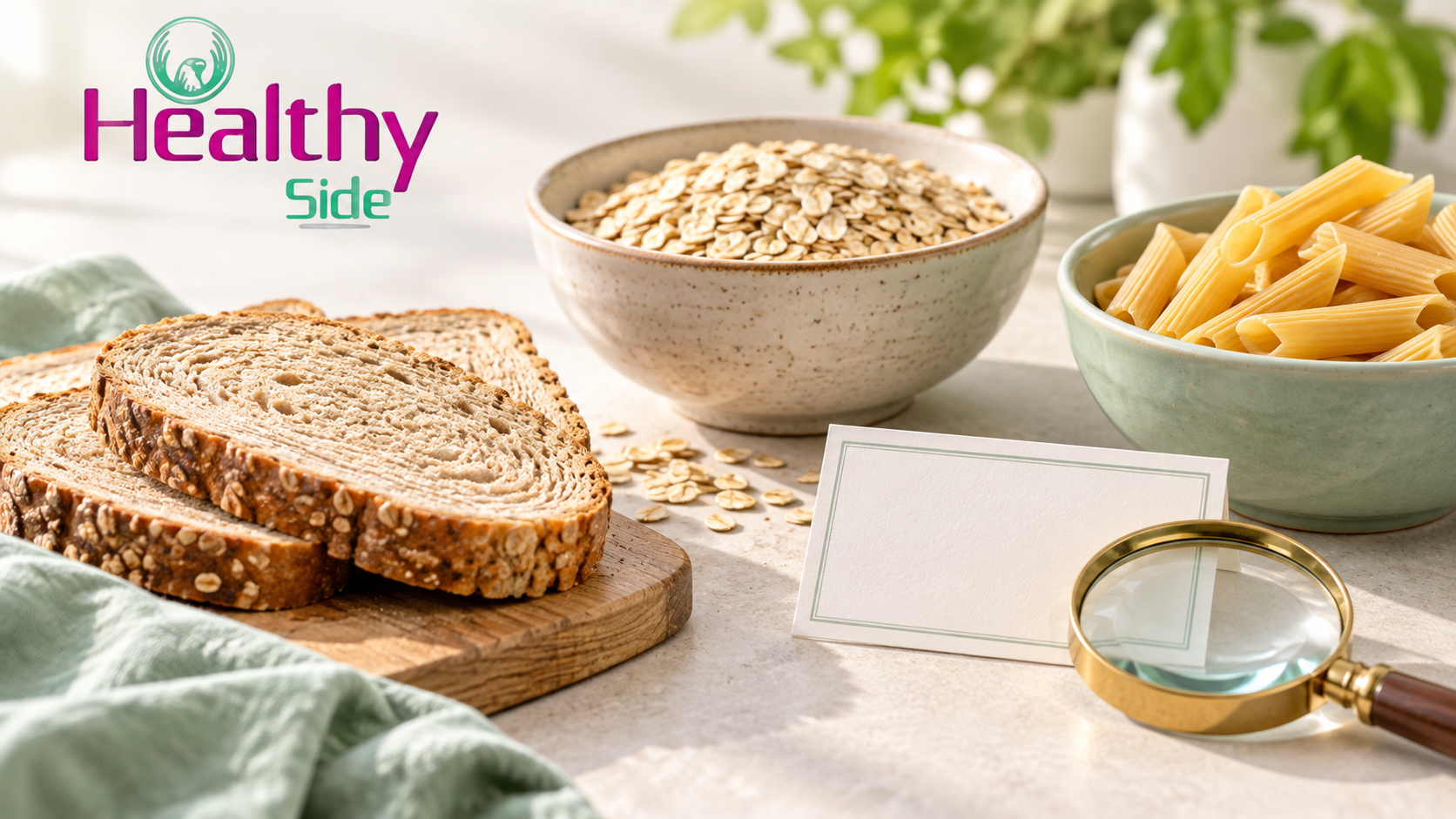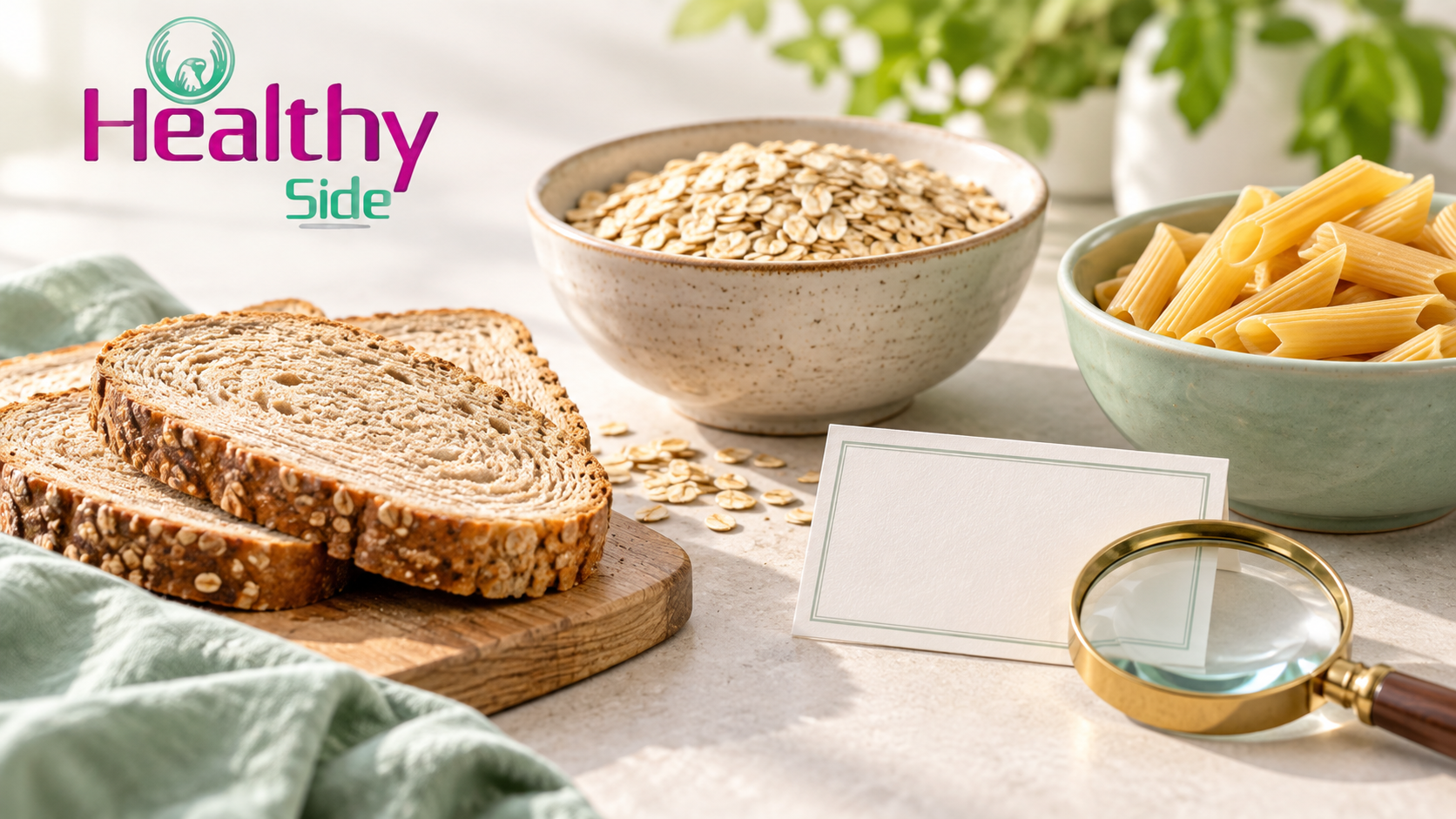
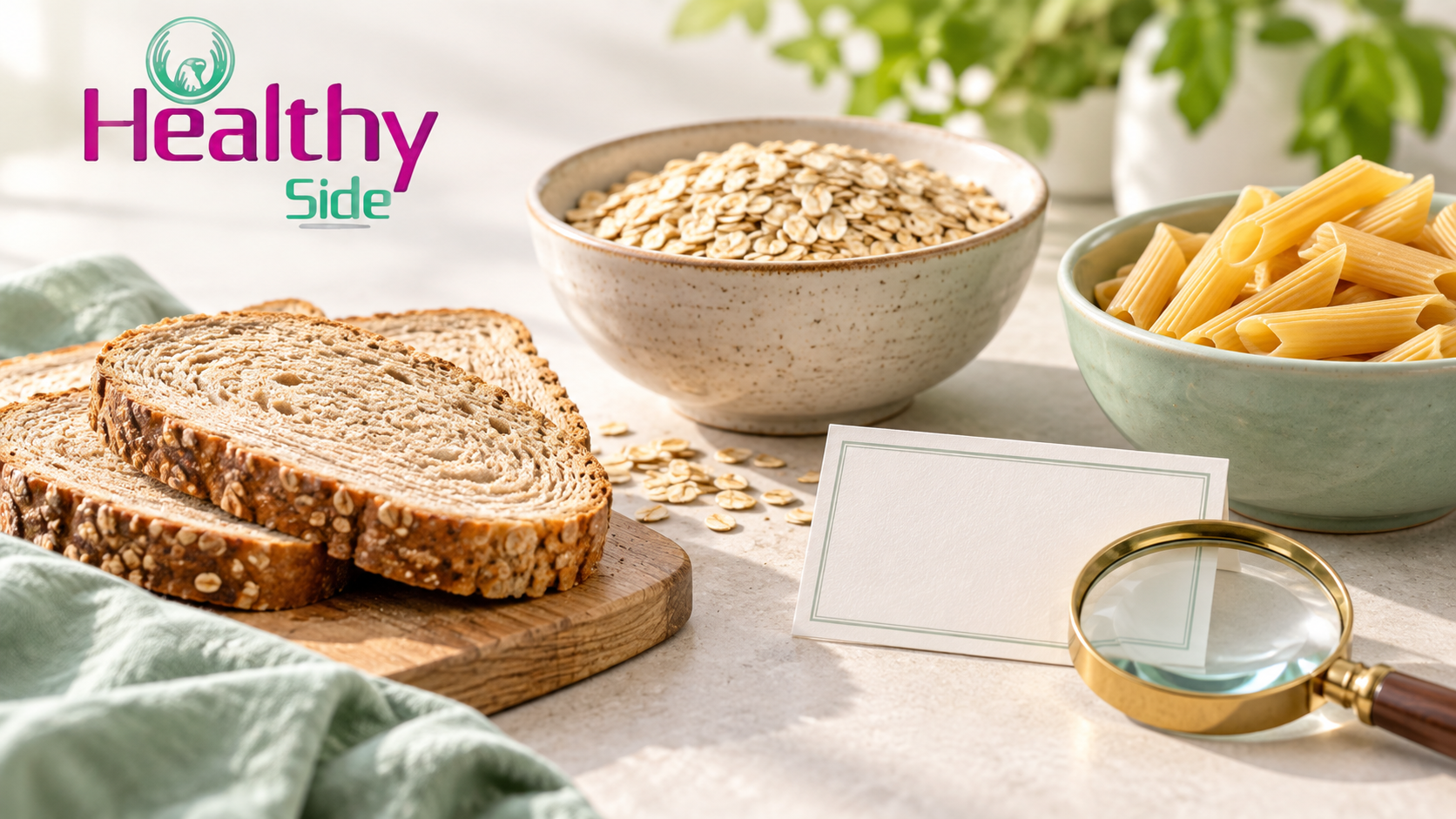
Brown colour and visible seeds do not finish the reading process. Appearance shows what bread looks like; the ingredient list identifies what is in that particular pack.
Look for grain descriptions
Read how the flour and grains are described, including whole wheat or whole grain wording. USDA guidance recommends checking the ingredient list for whole grains rather than relying on a grain illustration.
Compare the actual product
Record pack weight and piece count when provided. Slices from two products may differ in weight, so use grams when comparing nutrition. Photograph size is not a reliable calculation basis.
Choose for the intended use
Think about sandwiches, breakfast, portability, texture and storage after opening. A bread suited to one recipe may not be your preference for another.
Check allergy requirements
Whole wheat is still wheat and is not a gluten-free substitute. With wheat allergy or coeliac disease, follow the care plan and review the current ingredients and declarations.
Keep a comparison checklist
Write down flour description, serving weight, piece count and storage instructions. Request a readable ingredient photograph when a general description such as healthy bread does not provide the necessary detail.
Save the checklist for your next purchase.
Reference: USDA — https://myplate-stg.kwaps.platform.usda.gov/eat-healthy/grains
الخبز البني
مكونات القمح الكامل
اختيار الخبز